
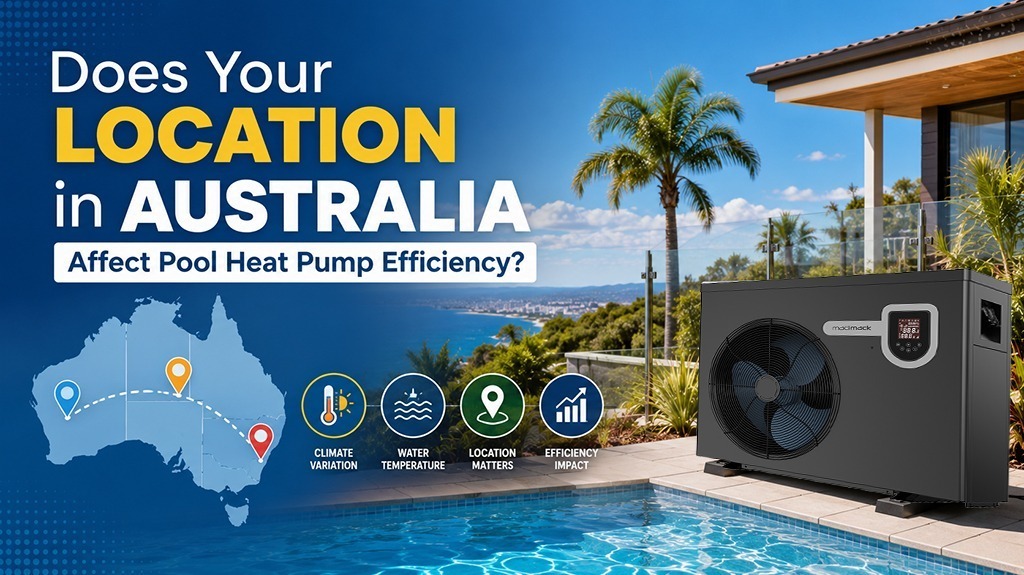
Most pool owners focus on pool size when choosing a swimming pool heat pump and that’s actually a very smart move - only a few also stop to think about the impact that “where they actually live” has on their selection. That can be a costly oversight. Location can directly affect how hard your heat pump works, how efficiently it runs, and how much it costs you every month.
Understanding this before you buy a pool heat pump can save you from a poor investment.
How Does a Swimming Pool Heat Pump Actually Work?
A swimming pool heat pump does not create heat from scratch. It pulls heat from the surrounding air and transfers it into your pool water. The warmer and more humid the outside air, the easier this process becomes. When air temperatures drop, the unit has to work considerably harder to do the same job.
This is why two identical heat pumps in two different cities can deliver very different results.
How Location Affects Your Heat Heat Pump Performance
Air Temperature
Heat pumps operate most efficiently in warmer air. As outside temperatures fall, the unit runs longer and draws more energy to reach your target pool temperature. Pool owners in cooler parts of Australia notice this most during winter and early spring.
Humidity
Higher humidity supports more efficient heat pump operation. Coastal areas generally benefit from this. Drier inland regions see less of this advantage, which can reduce overall efficiency during cooler months.
Seasonal Variation
Some Australian cities experience significant temperature swings between summer and winter. A heat pump sized for Sydney conditions may not keep up through a cold Melbourne winter. The wider the seasonal range, the more carefully you need to think about sizing and output.
What Your Location Actually Means for Your Heat Pump
Queensland
Queensland's warm climate is genuinely favourable for heat pump operation. High ambient temperatures mean the unit runs efficiently with lower energy consumption across most of the year. Pool owners here generally need a lower kW output to maintain comfortable water temperatures year-round.
New South Wales
Coastal NSW offers a well-balanced climate that suits heat pump operation across most seasons. Sydney pool owners can expect strong efficiency through autumn and spring. Pool owners further inland face colder winters and should size their swimming pool heat pump accordingly.
Victoria
Victoria presents some of the more demanding conditions for a pool heat pump. Cold winters, variable spring weather, and cool overnight temperatures push the unit to work harder for longer periods. To maximise efficiencies and overall performance, Victorian pool owners benefit from selecting a quality brand heat pump, a higher kW output and using a quality pool cover overnight to reduce heat loss.
Western Australia
Pool owners in Perth generally find year-round heating straightforward with the right unit. Perth's warm, dry climate keeps heat pump performance reliable through most of the year. The lower humidity reduces some efficiency gains, but consistently warm air temperatures offset this.
South Australia
Adelaide experiences hot summers and cold winters. This wider performance range across the year means pool owners need a heat pump that handles both ends effectively. Undersizing here tends to show up most during late autumn and winter.
What This Means When You Are Buying a Pool Heat Pump
Location needs to be part of your decision from the beginning, not something you consider after you have already chosen a unit.
Here is what to keep in mind:
- Match your kW output to your climate, not just your pool volume.
- Cooler climates require a higher kW rating for the same size pool.
- A pool cover reduces overnight heat loss significantly in colder regions.
- Ask your dealer about performance at lower air temperatures, not just peak conditions.
The best swimming pool heat pump is the one sized correctly for both your pool volume and your local climate. A correctly matched unit runs more efficiently, costs less to run and will hold up better over time.
Overcoming Location Challenges
Your location sets the conditions, but it does not limit your options. A few practical steps make a significant difference in how efficiently your swimming pool heat pump performs.
- Use a pool cover: A pool cover is the single most effective way to retain heat overnight. In cooler climates especially, uncovered pools lose a large amount of heat after the sun goes down. A good cover reduces that loss considerably and takes pressure off your heat pump every single day.
- Size for your climate, not just your pool: Pool owners in colder regions like Canberra or Tasmania benefit from sizing up slightly beyond the standard recommendation. The extra output gives your heat pump room to perform consistently when air temperatures drop.
- Choose inverter technology: An inverter pool heat pump adjusts its output based on current conditions rather than switching fully on or off. This makes it far more efficient in variable climates where temperatures shift regularly across the day or season.
- Pair with solar: Running your heat pump during peak solar hours reduces the energy cost of heating significantly. Pool owners with solar panels can offset a large portion of their heat pump's running costs by timing operation around solar generation.
Conclusion
Your location in Australia can directly affect how your swimming pool heat pump performs every single day. A pool owner in Brisbane and a pool owner in Hobart are dealing with completely different conditions, and their heating needs reflect that. Treating location as an afterthought can be one of the most common reasons pool owners end up with a heat pump that underdelivers or drives up energy costs unnecessarily.
Shop for Madimack's Range of Swimming Pool Heat Pumps
If you are ready to find the right fit, Madimack specialises in energy-efficient pool heating solutions built specifically for Australian conditions and pool sizes. With a focus on sustainability and advanced inverter technology, Madimack pool heat pumps are designed to deliver reliable, cost-efficient heating year-round, regardless of where you are in the country.
Explore our full range of residential pool heat pumps here.
FAQ's
Yes, location directly affects how hard your heat pump works. Cooler air temperatures make the unit work harder, consuming more energy to reach the same pool temperature.
Warmer, humid climates like Queensland offer the most efficient conditions. Heat pumps extract heat from the air more easily when ambient temperatures stay consistently high.
Yes, but it requires a correctly sized unit with a higher kW output. Undersizing in Victoria's colder climate leads to higher running costs and poor performance.
Higher humidity supports more efficient heat pump operation. Coastal areas benefit from this, while drier inland regions see slightly reduced efficiency during cooler months.
Yes. Pool owners in Canberra, Tasmania, or inland Victoria should size up slightly beyond the standard recommendation to maintain consistent performance through winter.
A pool cover significantly reduces overnight heat loss, especially in cooler climates. This lowers the workload on your heat pump and reduces monthly running costs.
Yes. An inverter unit adjusts output based on current conditions rather than switching fully on or off, making it far more efficient across Australia's varying seasonal temperatures.