
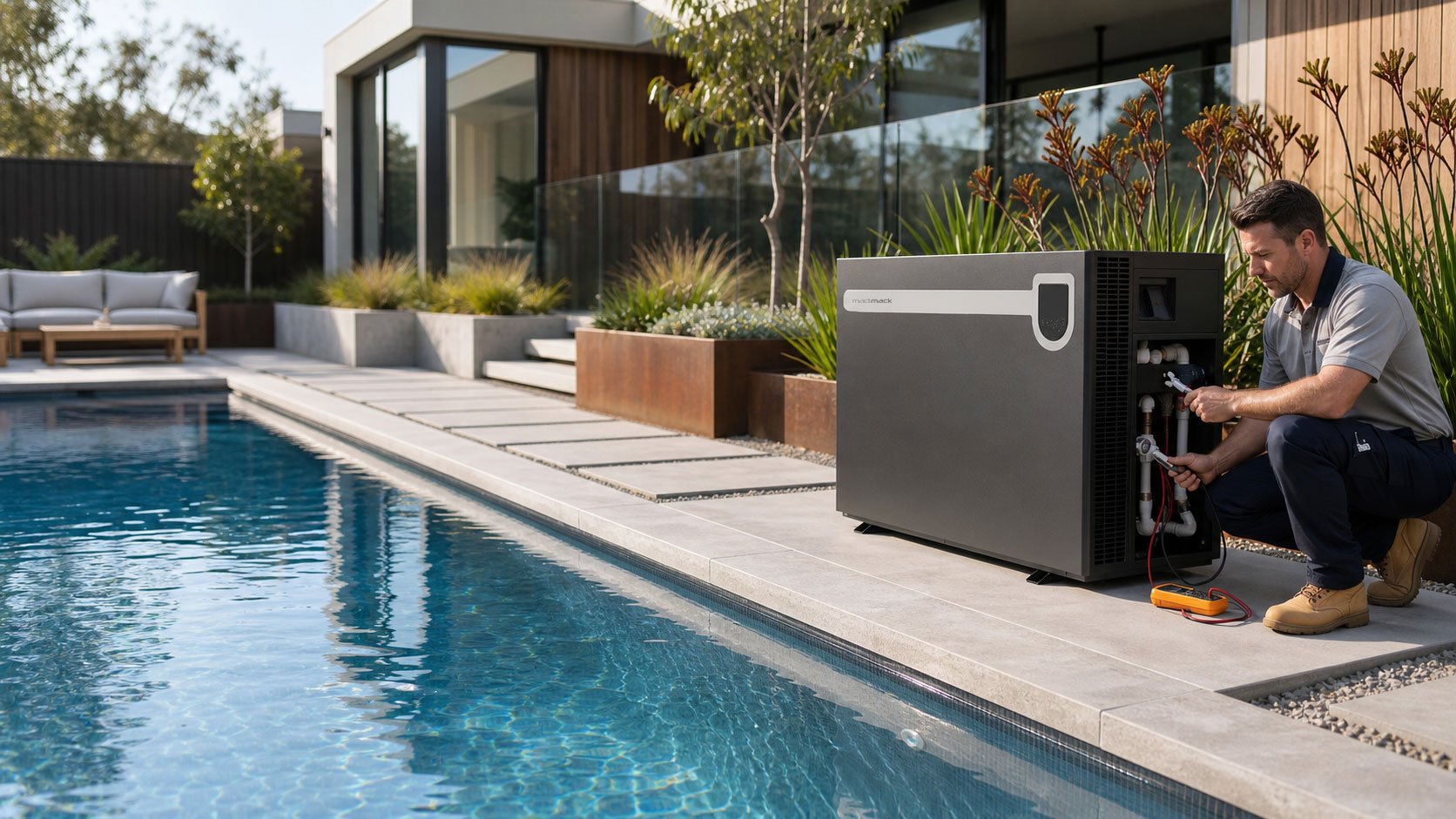
Installing a swimming pool heater is not simply about choosing a unit with the highest heating capacity. The efficiency, running costs, heating performance, and long term reliability of your system all depend on proper planning and installation.
From pool size and climate conditions to airflow, placement, and maintenance, every stage affects how effectively your pool heating system performs throughout the year.
Here are factors you should keep in mind before, during or after installation:
Before Installation
Before installing any swimming pool heater, it is important to evaluate how the system will perform within your specific property conditions. Choosing the wrong setup early can lead to higher energy costs, slower heating times, and unnecessary strain on the equipment.
1. Pool Size and Water Volume
Firstly, your pool’s total water volume directly affects the type of swimming pool heat pump required. A larger pool naturally takes longer to heat and maintain at a comfortable temperature.
When calculating heating requirements, installers typically consider:
- Pool length, width, and average depth
- Total water volume in litres
- Desired swimming temperature
- Average outdoor temperatures
- Wind exposure around the pool
For example, a compact plunge pool in Brisbane will require a very different setup compared to a large family pool in Melbourne.
2. Local Australian Climate Conditions
Climate plays a major role in heating efficiency. While some regions experience mild winters, others face lower overnight temperatures that place greater demand on pool heating systems.
As a result, homeowners should consider how often the pool will be used throughout the year.
In cooler climates, a properly sized swimming pool heat pump can maintain stable temperatures efficiently throughout extended swimming seasons. Modern full inverter pool heat pumps are specifically designed to adapt their output based on heating demand, helping homeowners achieve greater energy efficiency while maintaining consistent water temperatures across varying Australian conditions.
3. Running Costs and Energy Efficiency
Although upfront cost matters, long term operating expenses often become the bigger consideration over time.
Modern Swimming Pool Heat Pumps are designed to deliver greater energy efficiency by extracting warmth from surrounding air rather than generating heat directly. Consequently, they generally cost less to operate compared to traditional electric heating systems.
Before installation, it is important to compare:
| Factor | Why It Matters |
| COP rating | Indicates overall heating efficiency and operating costs |
| Full inverter technology | Helps optimise energy consumption and maintain stable temperatures |
| Heating capacity | Proper sizing is essential for consistent performance and efficient operation |
|
Noise levels |
Impacts comfort in residential environments |
|
Heat-up performance |
Heating speed and performance can vary significantly between manufacturers |
|
Warranty coverage |
Reflects manufacturer confidence and long-term product durability |
|
Service and support |
Access to reliable technical support and servicing can improve ownership experience |
|
Customer reviews |
Real-world customer feedback can provide valuable insight into product performance and support quality |
|
Qualified installation |
Working with an authorised dealer and experienced installer helps maximise system efficiency and reliability |
|
Performance guarantees |
Some manufacturers may offer performance guarantees when systems are correctly sized and installed |
Choosing an undersized unit may initially save money, although it often leads to poor performance and increased energy consumption later.
4. Pool Cover Compatibility
A pool cover should never be treated as an optional extra when installing a swimming pool heater.
Without adequate heat retention, pools lose significant warmth overnight through evaporation. Consequently, the heating system must work harder to maintain the desired temperature.
Using a high quality pool cover helps:
- Reduce heat loss
- Improve heating efficiency
- Lower operating costs
- Shorten heating times
- Reduce strain on equipment
This becomes particularly important during cooler Australian months.
During Installation
Once the right system has been selected, installation quality becomes the next major factor influencing performance.
Even premium heating systems can underperform if installation is handled incorrectly.
Correct Placement of the Heat Pump
Swimming pool heat pumps require sufficient airflow to operate efficiently. Therefore, positioning the unit in a confined or poorly ventilated area can significantly reduce performance.
During installation, the system should be placed:
- In an open outdoor location
- Away from walls restricting airflow
- Clear of excessive debris or vegetation
- On a stable and level surface
- With adequate drainage nearby
Additionally, proper spacing around the unit allows technicians to access the system easily for servicing and maintenance.
Why Placement Matters
Poor placement can lead to:
- Reduced heating efficiency
- Higher electricity consumption
- Increased operational noise
- Shortened equipment lifespan
- Restricted airflow around the condenser
For this reason, experienced installation professionals always assess airflow conditions before final positioning.
Plumbing and Water Flow Configuration
Correct water flow is another critical factor during installation.
If water moves too quickly or too slowly through the heating system, efficiency can drop considerably. As a result, installers must ensure the filtration system and circulation rates are properly balanced with the swimming pool heat pump.
At this stage, bypass valves are often installed to help regulate flow rates efficiently.
Electrical Requirements and Compliance
Because pool heating systems operate continuously for extended periods, proper electrical setup is essential.
Professional installers ensure:
- Electrical loads are correctly balanced
- Safety switches comply with Australian standards
- Wiring is protected from weather exposure
- System voltage requirements are matched properly
This not only improves operational safety but also helps protect the equipment from long term electrical issues.
Smart Controls and Automation
Modern pool heating systems increasingly include automated controls and WiFi integration.
During installation, these features can be configured to:
- Schedule heating times
- Monitor energy usage
- Adjust temperatures remotely
- Improve operational efficiency
Consequently, homeowners gain greater control over both comfort and running costs.
After Installation:
Once installation is complete, maintaining the system properly becomes essential for preserving heating performance and energy efficiency.
Regular System Maintenance
Like any major outdoor equipment, swimming pool heat pumps require periodic servicing.
Over time, dirt, leaves, and debris can restrict airflow or reduce operational efficiency. Therefore, regular inspections help prevent unnecessary wear and costly repairs.
Routine maintenance should include:
- Cleaning filters and coils
- Checking airflow clearance
- Inspecting plumbing connections
- Monitoring refrigerant performance
- Testing system controls
Consistent servicing also helps maximise equipment lifespan.
Seasonal Temperature Adjustments
Australian weather conditions change considerably throughout the year. Consequently, heating settings should be adjusted seasonally rather than left unchanged year round.
During warmer periods, lower temperature settings may maintain comfortable swimming conditions efficiently. Meanwhile, cooler months may require longer heating cycles.
Small adjustments can make a noticeable difference in energy consumption over time.
Conclusion
At Madimack Australia, we design advanced Swimming Pool Heat Pumps specifically for Australian conditions, combining inverter technology, energy efficiency, and quiet operation across our product range.
Whether you are heating a compact plunge pool or a larger family swimming pool, Madimack's current pool heating range, including the InverECO Plus, InverECLIPSE Plus, and InverELITE V4, is engineered to deliver reliable performance, exceptional energy efficiency, ultra-quiet operation, and lower long-term operating costs under Australian conditions.
Ultimately, proper installation planning ensures your pool remains comfortable, energy efficient, and ready for use throughout more months of the year.