
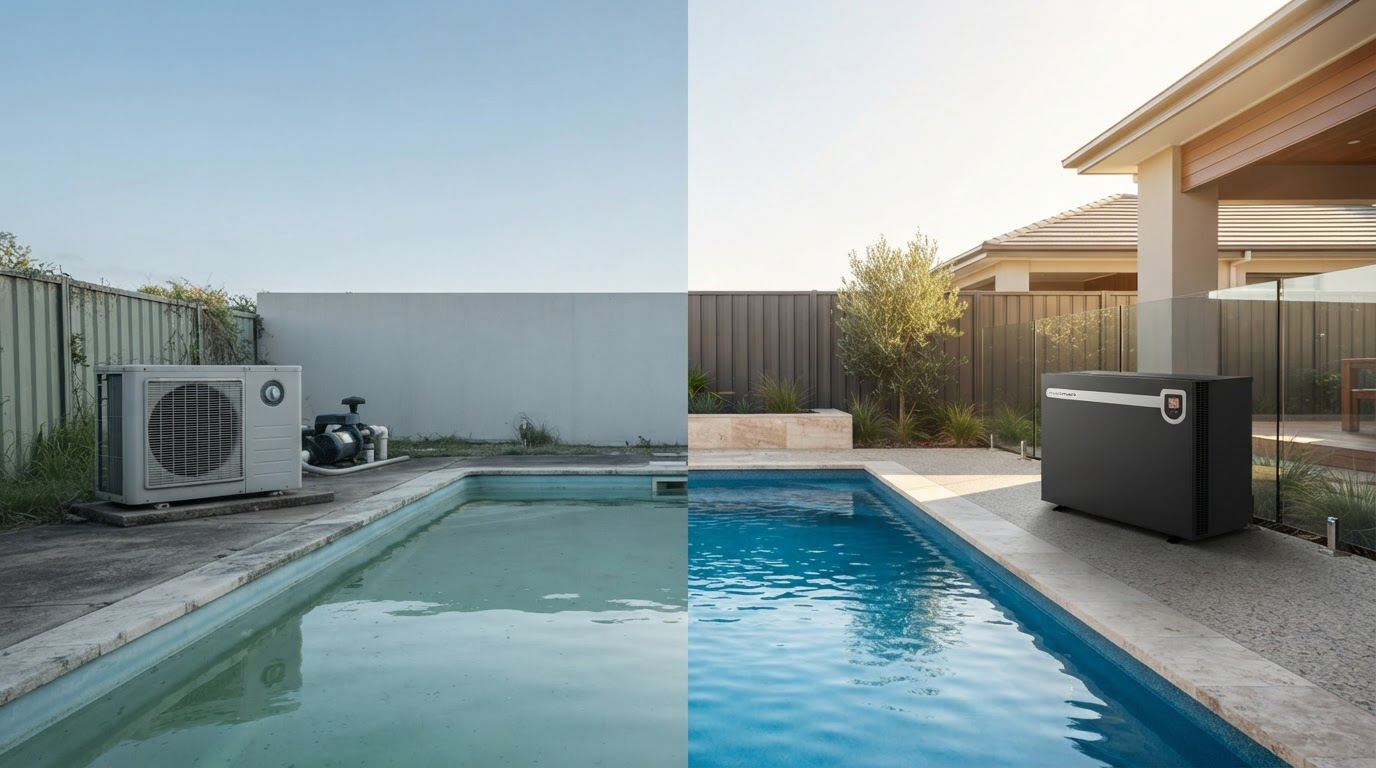
When comparing pool heat pumps, many Australian homeowners focus on the upfront purchase price. While this is important, it is only part of the overall cost of pool heating.
Running costs, energy efficiency, noise levels, and long-term performance can all have a significant impact on what your heating system costs over its lifetime.
This is where the difference between traditional non-inverter pool heat pumps and modern inverter technology becomes important. Madimack InverELITE V4 uses the same inverter technology to automatically adjust its output based on heating demand, helping maintain efficient and consistent pool heating.
As pool owners who are looking to enjoy their swimming season and not to worry about long-term operating costs, understanding these differences can help you to pick which heating solution fits best for you.
What Are the Different Types of Pool Heat Pumps?
Not all pool heat pumps operate in the same way. While they all serve the same purpose of heating pool water, the technology behind them can significantly affect energy efficiency, running costs, and long-term performance.
There are two main categories: Non-inverter and Inverter pool heat pumps.
Non-Inverter Pool Heat Pumps
Non-inverter pool heat pumps use fixed-speed technology. When heating is required, the compressor operates at full power until the desired water temperature is reached before switching off completely.
While these systems typically have a lower upfront cost, they can consume more energy over time due to their repeated start-stop operation.
Non-inverter systems may suit pool owners who only heat their pool occasionally or have relatively short swimming seasons.
Inverter Pool Heat Pumps
Inverter pool heat pumps represent the latest generation of pool heating technology. These systems regulate both compressor and fan speeds to optimise performance under changing conditions.
The Madimack InverELITE V4 is an example of a full inverter pool heat pump designed for Australian conditions. By continuously adjusting its operation based on demand, it helps deliver efficient, reliable pool heating while supporting lower long-term operating costs.
How Do You Know It’s Right For Your Pool?
The best choice depends on factors such as your pool size, local climate, swimming season, and heating goals. While non-inverter systems may suit occasional use, many Australian homeowners choose inverter technology for its improved efficiency, quieter operation, and long-term value.
For pool owners focused on reducing ownership costs rather than simply minimising upfront spend, a full inverter solution such as the Madimack InverELITE V4 is often worth considering.
Madimack InverELITE V4 vs Non-Inverter Pool Heat Pumps
| Feature | Madimack InverELITE V4 | Non-Inverter Pool Heat Pump |
|---|---|---|
| Technology | Full inverter technology | Fixed-speed technology |
| Compressor Operation | Automatically adjusts output based on demand | Operates at full power or switches off |
| Energy Efficiency | Optimised energy usage | Higher energy consumption |
| Running Costs | Lower long-term operating costs | Higher long-term operating costs |
| Noise Levels | Quieter operation at variable speeds | Louder due to repeated start-stop cycles |
| Temperature Stability | Maintains a more consistent pool temperature | Greater temperature fluctuations |
| Climate Performance | Designed to adapt to changing Australian conditions | Performance varies more with demand |
| Solar Compatibility | Excellent for solar-powered households | Limited efficiency benefits from solar |
| Component Wear | Reduced compressor stress over time | Increased wear from frequent cycling |
| Long-Term Value | Strong ownership value over the life of the system | Lower upfront cost but potentially higher ownership costs |
| Best Suited For | Regular pool use, extended swim seasons, energy-conscious homeowners | Occasional pool use and budget-focused projects |
| Upfront Investment | Higher | Lower |
While both systems can heat a pool, the key difference is how they manage energy. The Madimack InverELITE V4 continuously adjusts its output to match demand, while a non-inverter system operates at maximum capacity whenever heating is required. For many Australian pool owners, this difference can significantly influence running costs, comfort, and long-term value.
How Each System Impacts Your Electricity Bills?
For many pool owners, the biggest difference between inverter and non-inverter technology is not the purchase price. It's the running cost.
While non-inverter heat pumps can be more affordable upfront, they typically use more energy over time because they operate at full power whenever heating is required.
Inverter pool heat pumps adjust their output based on demand, helping maintain pool temperature more efficiently and reduce electricity consumption.
For households that heat their pool regularly, this can make a noticeable difference over the life of the system. That's why many Australian homeowners choose inverter models such as the Madimack InverELITE V4 when looking for long-term value and energy efficiency.
Which Pool Heat Pump Performs Better in Australian Conditions?
Australia's climate can have a significant impact on pool heating performance. While both inverter and non-inverter pool heat pumps can heat a pool effectively, efficiency often becomes more important as heating demand increases.
Queensland
In warmer locations such as Brisbane and the Gold Coast, pool heating demand is generally lower throughout the year. Both systems can perform well, but inverter models can help reduce energy use during extended swim seasons.
New South Wales
In Sydney and Newcastle, temperatures can vary considerably between seasons. Inverter technology can adapt to changing conditions and maintain a more consistent pool temperature with less energy consumption.
Victoria and Tasmania
In cooler locations such as Melbourne and Hobart, pool heat pumps often need to work harder to maintain water temperature. This is where inverter technology can provide greater efficiency and lower running costs over time.
For pool owners looking to maximise efficiency across changing Australian conditions, full inverter systems such as the Madimack InverELITE V4 are designed to automatically adjust performance based on heating demand.
Performance, Noise and Long-Term Value
When comparing pool heat pumps, heating speed is only part of the story.
Yes, both can heat a pool effectively when correctly sized but, the difference is what happens after the target temperature is reached.
A non-inverter heat pump continues to operate using a start-stop cycle, which can increase energy use, create more noticeable noise, and place greater strain on components over time.
An inverter heat pump automatically adjusts its output to maintain the desired temperature more efficiently. This can help deliver:
- More consistent water temperatures
- Quieter day-to-day operation
- Lower energy consumption
- Reduced wear on system components
Normally, homeowners who use their pool regularly, these benefits often contribute to better long-term value. This is why full inverter systems such as the Madimack InverELITE V4 have become a popular choice for Australian pool owners looking to balance performance, comfort, and efficiency.
Is an Inverter Pool Heat Pump Worth the Extra Cost?
The answer largely depends on how much you love your pool! For households that use their pool regularly, want to extend their swimming season, or to reduce long-term operating expenses, inverter technology delivers greater value over time.
When comparing options, it is important to look beyond the purchase price and consider:
- Running costs
- Energy efficiency
- Local climate
- Pool size and heating demand
- Expected lifespan
- Long-term ownership costs
Making the buying decision is not simply about what a heat pump costs to buy, it is also choosing a system that can efficiently maintain comfortable water temperatures season after season. Suggestively a full inverter system Madimack InverELITE V4 provides an advantage, particularly for homeowners seeking a balance of performance, efficiency, and long-term value.
Making the Right Choice for Your Pool
The best pool heat pump isn’t the cheapest one. Factors such as running costs, pool size, local climate, and heating demand can all have a greater impact on long-term value than the initial purchase price.
While non-inverter systems can suit occasional pool use, many Australian homeowners choose inverter technology for its improved efficiency and lower operating costs. Designed for Australian conditions, the Madimack InverELITE V4 helps deliver reliable pool heating, quieter operation, and greater energy efficiency throughout the swimming season.
By looking beyond upfront costs, you can choose a solution that provides better performance and value over the long term.
FAQ's
The main difference is how the compressor operates. A non-inverter pool heat pump runs at full power whenever heating is required and switches off once the target temperature is reached. An inverter pool heat pump automatically adjusts its output based on heating demand, allowing it to maintain water temperature more efficiently while using less energy.
For many Australian pool owners, yes. While inverter pool heat pumps generally have a higher upfront cost, they often deliver lower running costs, quieter operation, and improved efficiency over time. For pools that are heated regularly throughout the swimming season, the long-term savings can help offset the initial investment.
An inverter pool heat pump is typically cheaper to run because it adjusts its output to match heating demand instead of operating at full power all the time. This can reduce electricity consumption while maintaining a more consistent pool temperature.
Inverter pool heat pumps generally perform better in cooler conditions because they can continuously adapt their operation as temperatures change. This makes them a popular choice in states such as Victoria, Tasmania, and cooler parts of New South Wales where heating demand is often higher.
Yes. A non-inverter pool heat pump can still be a practical option for pool owners with shorter swimming seasons, occasional pool use, or tighter budgets. However, it is important to consider both the purchase price and the long-term operating costs before making a decision.
The exact savings depend on factors such as pool size, climate, heating schedule, electricity rates, and system sizing. However, inverter technology is designed to reduce energy consumption by avoiding the constant full-power operation associated with traditional non-inverter systems.
Inverter pool heat pumps are generally quieter because the compressor and fan can operate at lower speeds once the desired temperature is reached. Non-inverter units often create more noticeable noise as they repeatedly switch between full power and off cycles.
he best pool heat pump depends on your pool size, local climate, swimming habits, and energy goals. For homeowners seeking lower running costs, quieter operation, and long-term efficiency, an inverter pool heat pump is often the preferred choice. For occasional use where upfront cost is the primary consideration, a non-inverter model may still be suitable.